

The Core Concept
This project is a "Reverse Design Sprint". Instead of asking students to solve a problem, they are asked to create one. They must redesign an everyday object (like a spoon, chair, or door handle) so that it remains recognisable but becomes frustrating or impossible to use.
The Aims
Understanding through Inversion: By intentionally breaking the functionality of an object, students are forced to analyse exactly what makes the object work in the first place (ergonomics, balance, material choice).
Innovation Strategy: It introduces the concept of "Design from Discontent" - the practice of identifying user frustrations to drive innovation. Students learn this by manufacturing the frustration themselves.
Critical Analysis: The project moves beyond "making fun things" by requiring a final reflection. Students must articulate the specific design principles they violated and how restoring those principles creates good design.

STUDENT EXAMPLES (From sketch to Newarc.ai)
SUGGESTED READING
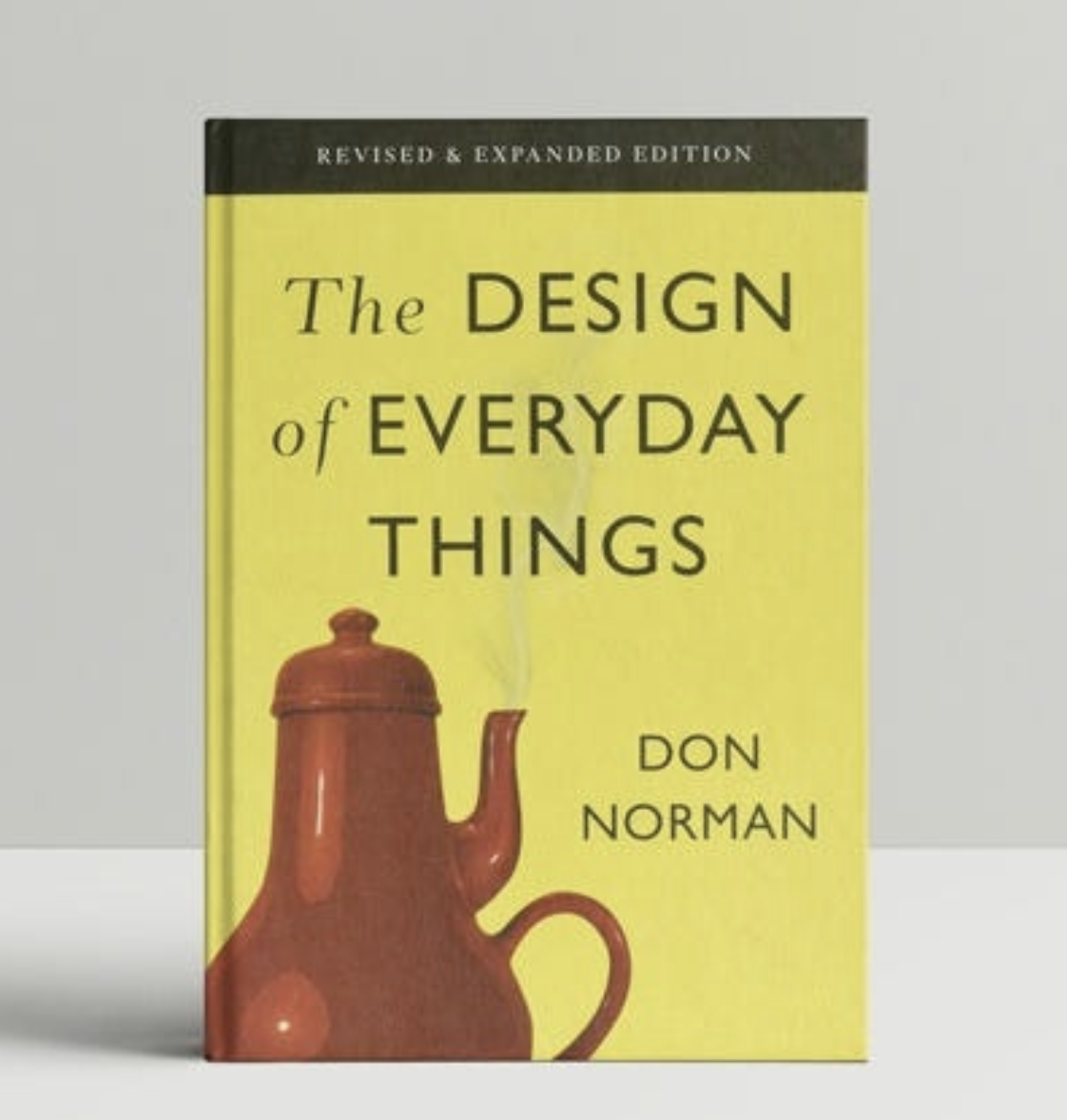
The Design of Everyday Things
Author: Don Norman
Book Summary
The Design of Everyday Things is widely considered the bible of user-centred design. In this fundamental text, Norman argues that struggling with a product is rarely "user error," but a failure of design. He shifts the blame from the user to the designer, emphasising that good design must bridge the gap between human goals and physical systems.
Key Concepts
Affordances: Physical properties showing possible actions (e.g., a chair affords sitting).
Signifiers: Signals indicating where/how to interact (e.g., a flat plate signifies "push"). Note: This concept was heavily emphasised in the revised edition to clarify affordances.
Mapping: The relationship between controls and effects (e.g., steering right turns the car right).
Feedback: Immediate signals that an action has occurred (e.g., a click).
Conceptual Models: The user's mental image of how a device works.